
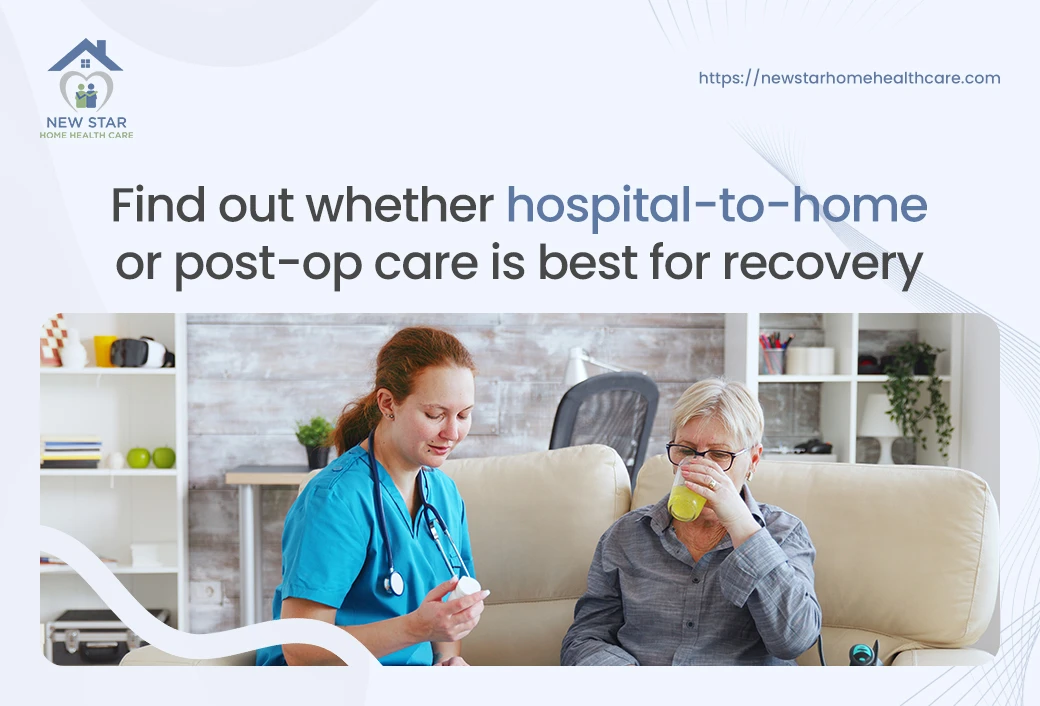
Life after surgery seems difficult to recover from, and the choice of the position where you or your loved one should recover may be overwhelming. The default option used to be the traditional post-operative facilities like the rehabilitation centers and the short term nursing homes care units over the decades. However, nowadays, a significant number of patients opt to resume healing at the comfort of their homes through the assistance of the professional. This has led to a significant question; Is home based recovery after an operation safer than facility based recovery?
We will discuss the fundamental distinctions, advantages, and safety issues that will allow you to make a good choice.
Emerging Hospital-to-Home Care
With the changing healthcare system, programs that transfer hospitals to homes have become very popular. These programs permit patients to go home shortly after they have undergone surgery without having to miss out on the nursing assistance, monitoring, and therapeutic services that they require. The emergence of these services is significantly caused by the development of remote monitoring, higher-trained home medical workers and preference of feeling at home by patients.
A lot of patients are sure that the post-surgery home treatment is more comfortable and emotionally favorable and it can help the process of healing directly. However, comfort is not the most important thing, but safety.
Operation of Traditional Post-Operative Facilities
The patients of traditional nursing homes care facilities like rehabilitation centers and short term nursing homes care facilities have formal round the clock care under their supervision. Such environments tend to provide:
- Physicians, nurses on-site.
- Physical and occupational therapy.
- Frequent check-ups of vital.
- Medication management
- Daily living activity-assistance.
Although these settings are safe and predictable, they also have their drawbacks like contact with infections, reduced individual care because of the staffing staff, as well as unfamiliar surroundings, which can cause some patients to become more anxious.
Home-Based Care following Surgery
Post-operative care at home is not just a family support and an elementary assistance as many people may assume. Today, it often includes:
- Home based skilled nursing care.
- Dressing and wound care.
- Administration and observance of medication.
- Mobility training and physical therapy.
- Post-operative care such as blood pressure checks, oxygen and glucose tests.
- Patient and family education.
The modern home healthcare system allows patients to enjoy the quality care provided in hospitals but in the comfort of their houses.
Home/Facility Safety Comparison
1. Infection Risk
Infection is one of the largest safety issues following a surgical procedure.
Traditional Facilities:
Although regulated and clean, there are very high numbers of patients in close quarters and this adds to the chances of contracting hospital-acquired infections.
Home:
At home, naturally there is not high exposure to the environment with high volumes of germs. This tends to decrease the rate of infection to a large degree and hence after surgery care at home is a safer option to many patients.
2. Personalized Attention
Facilities:
The employees have to share their focus between a high number of residents. Patients when using high patient to nurse ratios may face delays in care despite having qualified nursing teams.
Home:
Home care brings about one- on-one attention. A therapist or a nurse is all about the needs of the individual meaning it would be more precise in monitoring and responding to the complications.
3. Emergency Support
Facilities:
There are emergency equipment and medical personnel who can respond immediately.
Home:
The technological developments based on telehealth, remote monitoring devices, and home-based skilled nursing services have helped in bridging the gap to a great extent. In addition, equipment might not be as comprehensive as in a facility but trained home nurses have the necessary equipment to address most of the post-surgical emergencies and escalate wherever necessary.
4. Emotional and Mental Health
The recovery is not purely physical but the state of mind is also significant.
Facilities:
Some patients might experience anxiety or depression due to the new environment and a lack of family.
Home:
The patients feel more at ease and sure at home. The usual routine, family, and increased autonomy lead to decreased stress and quicker recovery.
Which Alternative Is the Safest In the Long Run?
Although the two settings provide the necessary care after surgery, most patients recover more safely and satisfactorily at home. Less risk of infection, customized care, and emotional comfort are the factors that make home-based recovery a powerful alternative to short term nursing home care. Integrated with home-based skilled nursing services, the models of hospital-to-home care now provide comprehensive care that was previously only offered in the clinical setting.
Is a Good Recovery a Good
Hospital-to-Home Recovery?
Home recovery can be most suitable when the patients:
- Stable at discharge medically.
- Be supported by family or care givers.
- A moderate but not intensive monitoring is required.
- Like to work in a known background.
- Desires to avoid getting in touch with other patients.
Nevertheless, patients with complicated medical history can also use facility-based care. The safest route can be determined with the assistance of a physician or discharge planner.
Final Thoughts
The decision between hospital-to-home care and the conventional post-operative facilities is not always very easy. However, it is possible within the framework of quality care in the home after an operation, sophisticated technology, and professionally trained home-care experts so that many patients are able to receive adequate care in the most comfortable place. Home-based recovery can provide the most optimal safety, comfort and personalized services regardless of whether the care is wound care, mobility, and skilled nursing services.
Hospital-to-home recovery will usually prove superior in case safety, convenience, and emotional well-being are paramount.